Robotermärchen
( 2 Votes )

Kybernetische Fabeln Virtuoser Autor Lem

Johannes Frankfurter, Neue Zeit, Februar 1984

Die Lemologen aller Galaxien sind wieder einmal neue, interessante, spannende Aufgaben gestellt: Sie werden ihre kybernetischen Maschinen und hypothetischen Roboter in nächster Zeit vor allem mit Fragen und Problemstellungen aus dem Reich der Fabeln und Märchen füttern. Denn unu hat sich das Phaenomen "Lem" offensichtlich auch auf diese Bereiche ausgedehnt (...).

Schon die Titel so mancher der Geschichten sprechen fuer sich: "Die vierte Reise oder Wie Trurl ein Femmefatalotron baute um Prinz Bellamor von Liebesqualen zu erlösen und wie es danach zum Babyboombardement kam". Oder: "Altruizin oder Der wahre Bericht darüber, wie der Eremit Bonhomius das universelle Glück im Kosmos schaffen wollte und was dabei heraus kam".  Schon allein die Virtuosität, mit der Lem (und wohl auch seine Übersetzer) die Wissenschaftssprache, die Fülle der Fremdworte darin zu einem ironisch-poetischen Ereignis macht, ist höchst amüsant.  Das er dabei immer wieder eines seiner Hauptthemen anschlaegt, es bei aller Ironie und Fabulierlust eigentlich tödlich bis todernst meint, das gibt diesen Erzählungen erst jenen Tiefgang und jene Dimension, die sie weit über alles (halbwegs) Vergleichbare aus dem Science-Fiction-Bereich hinausheben (...).

Kommentare
Neuer Kommentar Suche
Fairy tales for a modern age
wiredweird Y-m-d H:i:s

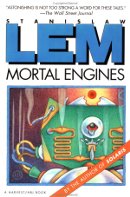
This review is from: Mortal Engines (Paperback)
The first dozen stories in this book are brief, amusing, and very clever. Most of them start in the traditions of fairy tales, with bold knights, beautiful princesses, powerful kings, and deadly dragons. As in traditional fairy tales, some describe great quests, while others narrate hubris and downfall. The difference is that every story is peopled (if you'll pardon the term) by robots. It creates a grand setting for Lem's adventures and warmly humorous inversion of all the old storytelling.

The final two stories, though, are the real gems of this collection. They are longer, they feature humans as well as robots, and are serious, even somber in tone. One is told by a human, part of the party that has to hunt down a dangerous robot across the stark surface of the moon. The teller finds the rogue in the end and fells it, but something in that last moment turns it from victory into completion of a much more ambiguous kind. The final story, "The Mask," is a sensitive look into a man-made mind. It conveys real complexity in the robot's sense of its own life. One of the story's many readings is a warning that, even if the feelings are carried in metal cases, they're as real to the minds feeling them as ours are to us. Creating a mind that can feel such feelings imposes a responsibility on the creator - a responsibility not met in this chilling story.

This is Lem at his best, and his best is very good. The happy satire of the first stories is some of Lem's most amusing. The conjecture in the last story is some of his darkest. The set as a whole shows Lem's range as a writer, even within the constraints that unify this wonderful collection.

link:http://www.amazon.com/review/R3DGJQJKKA2BIM/r ef=cm_cr_rdp_perm
Kommentar schreiben
Name:
E-Mail:
 
Titel:
Bitte geben Sie den Anti-Spam-Code aus diesem Bild ein.