

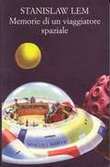
Sterntagebücher
( 12 Votes )

Zwar sind Ijon Tichy, dem kosmischen Globetrotter, weder in der Zeit noch im Raum Grenzen gesetzt, dennoch mag es seltsam anmuten, wenn der Verfasser der Sterntagebücher den gedankenlösen Touristen von der Erde die Leviten liest, weil sie mit ihrem Müll das Weltall verseuchen. Doch die Sorge um solch eher abgelegene Probleme der Weltraumfahrt gehört ebenso zum Persönlichkeitsbild des bedeutenden Sternreisenden wie der unermüdliche Forscherdrang, der ihn mit seiner Rakete in immer neue und abgelegenere Distrikte der Galaxis treibt. Die Aufzeichnungen über die Entdeckungen und Erkenntnisse Ijon Tichys, aber auch über die von ihm auf seinen Reisen bestandenen Gefahren der Nachwelt wenigstens teilweise zugänglich gemacht zu haben  ist das Verdienst Professor Tarantogas, der den riesigen Nachlaß des auf tragische Weise Entschwundenen gesichtet und auf den letzten Stand gebracht hat.

Kommentare
Neuer Kommentar Suche
Gulliver's Journeys in space
Shadowfire Y-m-d H:i:s

"The Star Diaries" cannot be easily classified, probably because of its varied content. In any case, this isn't science fiction. This is philosophical satire, although it isn't clear what precisely it satirizes. The theme isn't consistent. The book is intended as a recollection of a spacefarer's unbelievable journeys, with each story being a separate adventure. Each is numbered, but the enumeration contains gaps, and, in any case, the numerical order isn't the chronological (the chronological order is 22, 23, 25, 11, 12, 13, 14, 7, 8, 28, 20, 21).

If one does read the stories in the chronological order, a certain evolution becomes clear: the earlier stories are light-hearted social satire with Ijon Tichy as the book's extremely close-minded but nevertheless courteous and polite hero romping about on alien planets ("Due to the retardation of the passage of time, my sneeze lasted five days and five nights, and when Tarantoga again opened the little door, he found me nearly unconscious with exhaustion", 12th Journey); but with each new journey the reader is bound to notice that the backgrounds begin to become more and more Earthlike, the cheerful pseudo-sci-fi camouflage is dropped, and Ijon himself becomes a convention designed to deliver the plot's message. Some of these later journeys begin to drag quite impressively (20 bored me to tears - especially when I realized that it's a direct copy of a shorter story in the "Further Reminiscences"), but from time to time deliver an incredibly potent message (13 and 21 being the most prominent examples - both dealing with personal freedoms).

Of the earlier romps, 7 (a multiple time loop causes Ijon to live and re-live every part in a scandal over who should go and repair the rudder), 12 (Ijon is stranded on Amauropia with a time machine, and, by speeding up the evolution of a race of local cave people, is forced to live through all the tribulation a tribe, a feudal kingdom, a theocracy, a Republic, and a militaristic regime can offer), and 14 (Ijon tours a planet whose high-tech amoeboid natives have a titanic taboo centered about the concept of "scrupts") seem to be the most fun.

The faults? As I mentioned, some of the later stories drag quite a bit, especially when the reader isn't prepared for a lesson in philosophy. Those looking for "Hitchhiker's Guide" sort of fiction will only be able to stomach about half the book. From time to time, Lem slips into writing entirely in and about fictional (read - "nonsensical") things. Of course, not all the nonsense is really non-sense: Lem relied on plays of words and puns for some of the humor, and most was probably lost in the translation (I was lucky to read it in the next best thing to the original Polish - Ukrainian).

Nevertheless, this is a startling, mind-bending, and superbly original read which should not be missed.

link:http://www.amazon.com/review/R19BL1O3P25LGJ/r ef=cm_cr_rdp_perm
Kommentar schreiben
Name:
E-Mail:
 
Titel:
Bitte geben Sie den Anti-Spam-Code aus diesem Bild ein.